Style Guide
How Vylore Is Reimagining Silver Anklets for Modern India
Explore modern silver anklet designs and simple ways to make them your own.
A Little Tradition. A Lot of Your Own Style.
In this article
- The Anklet Has Always Had a Place in Indian Jewellery
- From Traditional Payal to the Modern Silver Anklet
- What Makes a Silver Anklet Feel Contemporary?
- Minimalist Anklets for Everyday India
- Statement and Sculptural Directions in Silver Anklets
- 925 Silver Anklet Design: Why Material and Design Work Together
- How Vylore Is Reimagining the Silver Anklet
- Silver Anklets for the Way India Dresses Today
- How to Choose the Right Silver Anklet
- From Tradition to Personal Expression
- A Familiar Form, Seen with New Intention
The anklet is a familiar presence in Indian jewellery, but familiarity does not make it fixed. Its scale, sound, symbolism and styling have always differed across regions, communities and individual lives. Today, the form is also being considered through cleaner lines, quieter details and more personal ways of dressing.
Vylore enters this conversation as a contemporary sterling silver jewellery brand shaped by a 25-year family jewellery legacy. Its approach to the silver anklet centres on thoughtful design, precision, quality and wearability. The aim is not to erase the payal’s cultural memory, but to see how a recognisable form can support modern expression.
The Anklet Has Always Had a Place in Indian Jewellery
India does not have one universal anklet tradition. Names, forms and meanings vary, as do preferences for weight, sound, ornament and occasion. Museum collections make this diversity visible: the Amrapali Museum’s anklet collection presents anklets as objects connected with regional traditions, identity and lived experience.
That context matters because a silver anklet can be ceremonial, decorative or purely personal depending on the wearer. Tradition is not a single design rule; it is a broad visual language open to selective adaptation.
From Traditional Payal to the Modern Silver Anklet
Payal is widely understood as an ankle ornament, while spellings and regional terms differ. “Payel” is another search and language variant, but neither term carries precisely the same association in every community. A search for silver payel may therefore reveal everything from substantial paired ornaments to light chain-led styles.
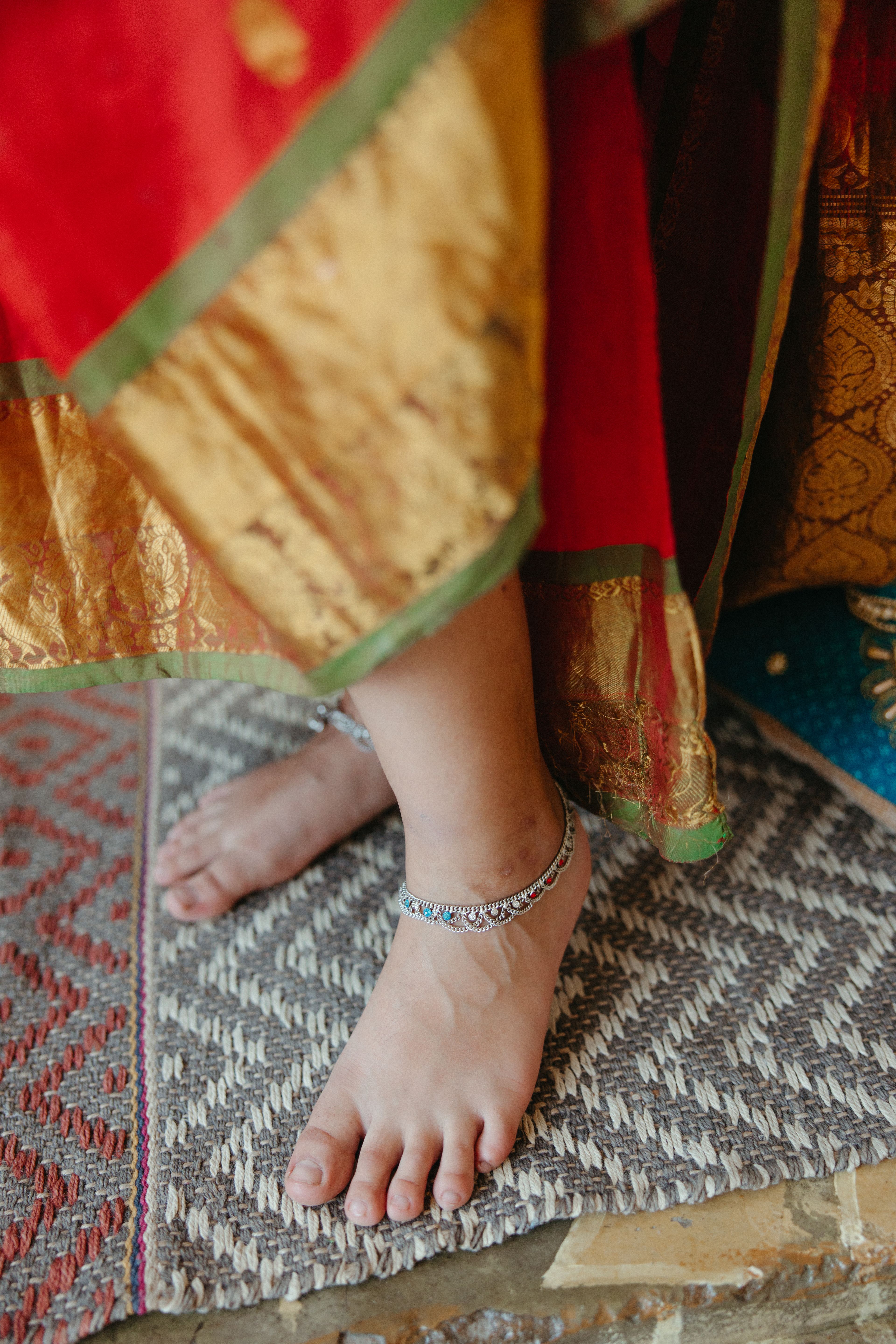
Modern interpretation rests on design decisions. A contemporary silver anklet may reduce scale, remove bells, simplify motifs or use one asymmetrical detail. It may be worn singly rather than as a matching pair. These are options, not a hierarchy: an elaborate payal and a spare ankle chain can each be meaningful.
What Makes a Silver Anklet Feel Contemporary?
A contemporary anklet design usually feels intentional at a small scale. Its character can come from:
- a clean, continuous silhouette;
- controlled negative space between elements;
- links or motifs with balanced proportions;
- a modern surface, whether bright, soft or textural;
- movement that is subtle rather than visually busy.
A geometric anklet might repeat circles, bars or angular forms, but geometry alone does not make it modern. Spacing, connection points and the relationship to the ankle decide whether the composition feels refined. Good design considers the piece both at rest and in motion.
Minimalist Anklets for Everyday India
A minimalist anklet works by editing. It may use a fine chain, a restrained motif or a small rhythm of polished elements. Because it does not dominate the outfit, it can sit naturally with denim, dresses, co-ord sets or an understated kurta.
Minimal does not mean generic or fragile. In a silver anklet, proportion, closure placement and the way the chain falls still require care. A low-profile design may work with open sandals, while closed shoes or active days may call for a different choice—or no anklet at all.
Statement and Sculptural Directions in Silver Anklets
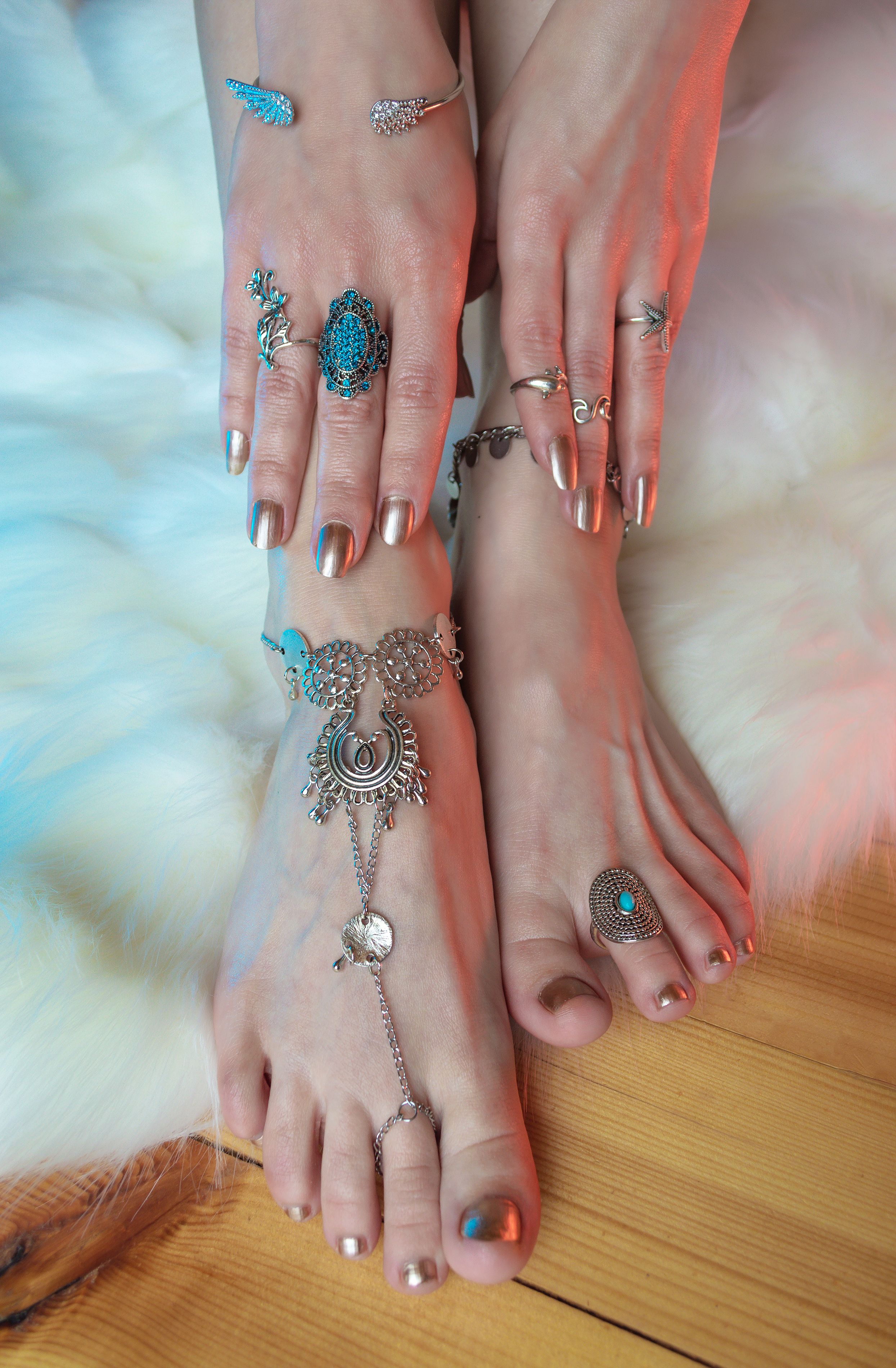
Statement design is not simply a matter of making an anklet larger. Expression can come from a strong central form, contrasting link sizes, layered chains, considered texture or a detail that changes as the wearer moves.
A sculptural silver anklet asks the eye to notice line and volume around the ankle. It may work best when the hemline and footwear leave visual space around it. The design should remain coherent from different angles because it is experienced through movement.
925 Silver Anklet Design: Why Material and Design Work Together
The term 925 sterling silver describes an alloy containing 92.5% silver, with the remaining 7.5% made up of other metals. That composition is different from claiming 100% pure silver. It gives designers a recognised material framework for jewellery while keeping purity information specific. Learn more about 925 sterling silver jewellery.
Vylore has confirmed that its silver is certified and its pieces use 925 sterling silver. Certification and hallmarking, however, should not be treated as interchangeable words. The Bureau of Indian Standards explains hallmarking as the accurate determination and official recording of precious-metal content. Buyers should inspect the product’s stated fineness, certification details and invoice rather than infer a named hallmark from the word “certified.”
In a 925 silver anklet design, material and form work together. Link thickness, joints, closure, weight and moving components affect function. Before selecting a silver anklet, ask what the certificate covers and whether product documentation identifies the material clearly.
How Vylore Is Reimagining the Silver Anklet
For Vylore, reimagining begins with design thinking rather than novelty for its own sake. The ankle creates a moving frame, so silhouette and spacing matter as much as decoration. A detail must make sense close up, then remain balanced when seen with an entire outfit.
This design-led approach connects the brand’s family jewellery knowledge with a contemporary point of view. Precision supports clean connections and deliberate proportions; wearability considers movement; individuality leaves room for restraint or stronger expression. See Vylore silver anklets.
The result is a direction for contemporary jewelry that remains aware of Indian visual culture without copying a historical object. Familiarity becomes a starting point. Form, finish and styling determine what comes next.
Silver Anklets for the Way India Dresses Today
Modern Indian wardrobes move easily between many silhouettes. A fine anklet can provide a quiet line below cropped denim or a midi dress. A more textured design may hold its own with a saree or festive kurta. Co-ord sets can suit either direction depending on fabric, hem and footwear.
The useful question is whether a piece’s scale and detail support a particular outfit. Consider how much ankle is visible, whether footwear has ornament, and whether other jewellery already carries the emphasis. Sometimes contrast works; at other times, restraint is stronger.
How to Choose the Right Silver Anklet
Before you buy silver anklet designs online or enquire in person, look beyond the first photograph.
- Fit: Measure the ankle where the piece will sit and allow comfortable movement without excessive slack.
- Length: Check both the full length and the usable adjustment range.
- Weight: Decide whether the piece suits occasional styling or longer wear.
- Closure: Examine how easily it fastens and whether the clasp feels secure for the design.
- Profile: Consider whether charms or raised details may catch on clothing or footwear.
- Material: Confirm 925 fineness and review the certification or supporting documentation.
- Finish: Ask how the surface is intended to age and what care the seller recommends.
- Styling: Choose in relation to the outfits, shoes and other jewellery you genuinely wear.
The right silver anklet is not only the prettiest option on screen. Its dimensions, construction and character must fit the wearer’s life.
From Tradition to Personal Expression
Contemporary jewellery can carry familiar forms forward through lighter proportions, quieter silhouettes, bolder geometry or new styling. The space between recognition and reinterpretation is where a silver anklet can feel most personal.
Vylore’s perspective is grounded in the idea that design adds value beyond the metal transaction. Its certified 925 sterling silver provides a clear material basis; thoughtful form and wearability give the piece its individual voice — the heart of Vylore’s design philosophy.
A Familiar Form, Seen with New Intention
The anklet remains relevant because it can hold cultural memory and respond to an individual wardrobe. Modern proportion, considered movement and clear material information change how the form is worn. Through its design-led perspective and certified 925 sterling silver, Vylore is exploring a more precise, expressive silver anklet for contemporary India.
Good to know
Frequently asked questions
Both describe jewellery worn around the ankle, but usage and cultural associations vary by region, community and design. Payal often suggests an Indian jewellery context; anklet is a broader English category term.
Some are designed for regular wear, but suitability depends on weight, profile, closure, fit, footwear and routine. Follow the maker’s care guidance and remove the piece when an activity could pull or damage it.
It is an anklet made from sterling silver with 92.5% silver content. Check the seller’s documentation to understand how purity is verified for the specific piece.
Measure the ankle at the intended position, then compare that number with the product’s usable length and adjustment range. The piece should move comfortably without slipping too low.
Yes, depending on the design. Compare its scale with the hemline, footwear and other jewellery rather than assuming the same piece will suit every look.
Follow the brand’s product-specific instructions. Store pieces separately in a dry place, handle them gently and use only recommended cleaning methods. Sterling silver can tarnish, so avoid “tarnish-proof” assumptions.