Brand Story
Vylore and the Rise of Design-Led Indian Jewellery Brands
Explore how design-led Indian jewellery brands bring heritage, changing tastes and contemporary ideas together.
Our Roots Shape Us. They Don’t Have to Define Us.
In this article
- What Does Design-Led Jewellery Actually Mean?
- How Indian Jewellery Is Expanding Beyond Occasion Wear
- Why Jewellery Design Matters
- From Craftsmanship to Contemporary Design
- What Is Contemporary Jewellery?
- Why 925 Sterling Silver Supports Contemporary Jewellery Design
- How Vylore Approaches Jewellery Through Design
- What Sets Design-Led Jewellery Brands Apart?
- The Future of Indian Jewellery: More Design, More Individuality
Indian jewellery is strongly connected to celebration, craftsmanship, family memory and social identity. Yet those roles no longer define the whole wardrobe. Alongside wedding and festival pieces, more people are considering jewellery through silhouette, proportion, material and the way a piece works with everyday clothing.
That expanded perspective is creating space for the design-led jewellery brand. Instead of treating design as surface decoration added to a metal purchase, such a brand makes jewelry design central to its identity. Vylore, a contemporary sterling silver jewellery brand from India, participates in this shift through distinctive forms intended for individual expression and real wardrobes.
What Does Design-Led Jewellery Actually Mean?
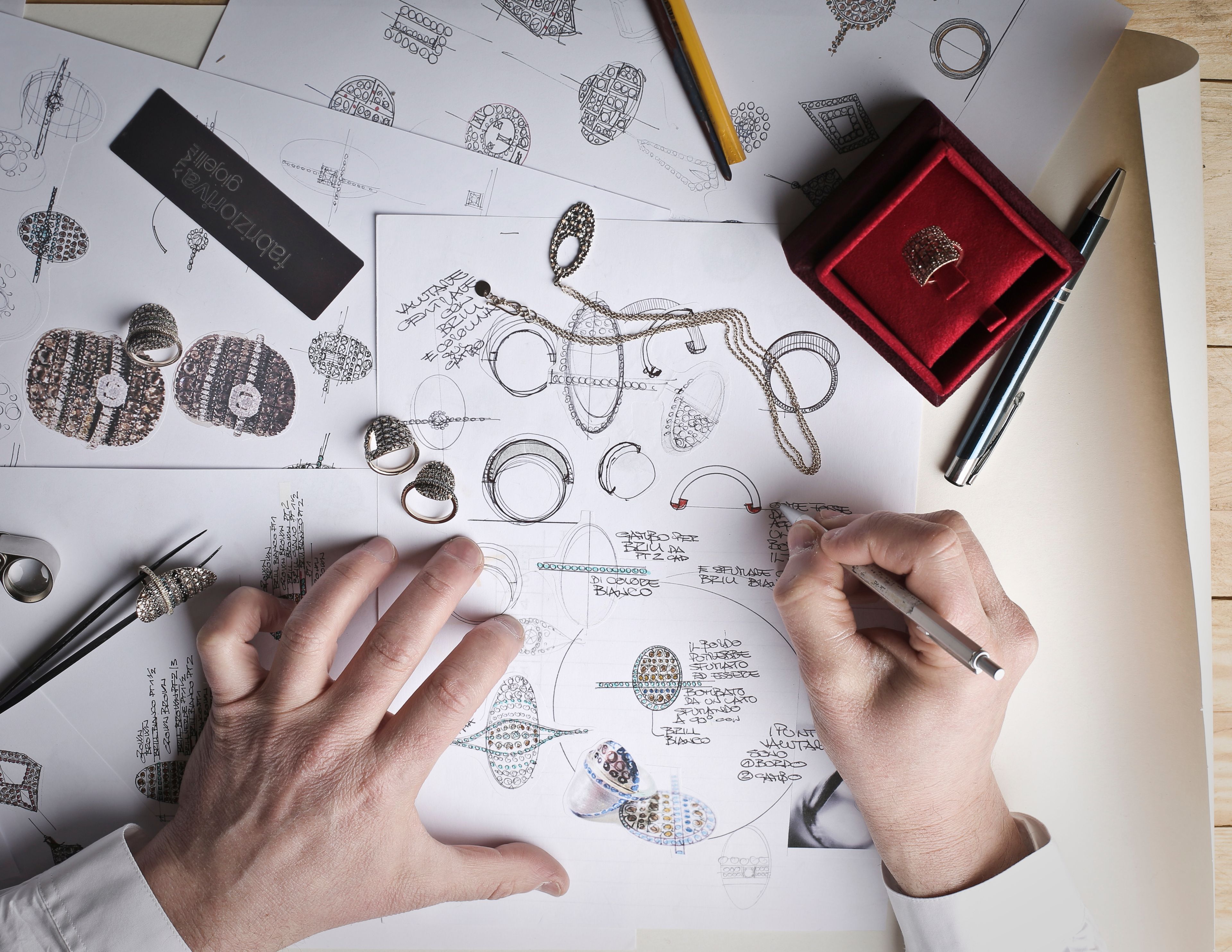
Design-led jewellery is created by treating form, proportion, material, function and wearability as connected decisions. Its visual identity comes from how these choices work together, not simply from the amount of ornamentation or the value of the metal.
A design-led brand asks practical questions early: how an earring sits, where a necklace meets a neckline and whether a ring allows comfortable movement.
Jewelry design therefore includes engineering, scale, fastening and balance. Designer jewelry may be minimal, sculptural or bold; coherent modern design jewelry communicates an idea while remaining usable.
How Indian Jewellery Is Expanding Beyond Occasion Wear
Indian jewellery culture has not abandoned weddings, festivals or ceremonial dressing. The more accurate observation is that its range is widening. A customer may value heritage jewellery for a family occasion and also want a restrained ring, architectural earrings or a silver necklace for work and informal plans.
This creates a broader role for jewelry for women as daily style choices and elements of a personal wardrobe. Scale, secure construction and coordination become meaningful alongside symbolism.
The shift is additive: the same wearer can value ornate or regional jewellery and choose minimal, sculptural or experimental forms in another context.
Why Jewellery Design Matters
Distinctive jewellery rarely depends on decoration alone. Its character may come from a controlled curve, an unexpected junction, asymmetry, a deliberate surface or the space held inside a form. These choices affect both appearance and use.
Proportion creates balance against the body. Geometry creates order or tension; texture alters light; negative space can make a form feel lighter; scale determines emphasis.
This is why jewelry design matters even when a piece appears simple. Simplicity exposes every decision; there is less ornament behind which weak proportions can hide. Unique design jewelry succeeds when distinctiveness has a reason and the form still works on the body.
Jewellery can function as a design object. Art jewelry may prioritise experimentation, while everyday pieces give greater weight to comfort and versatility.

From Craftsmanship to Contemporary Design
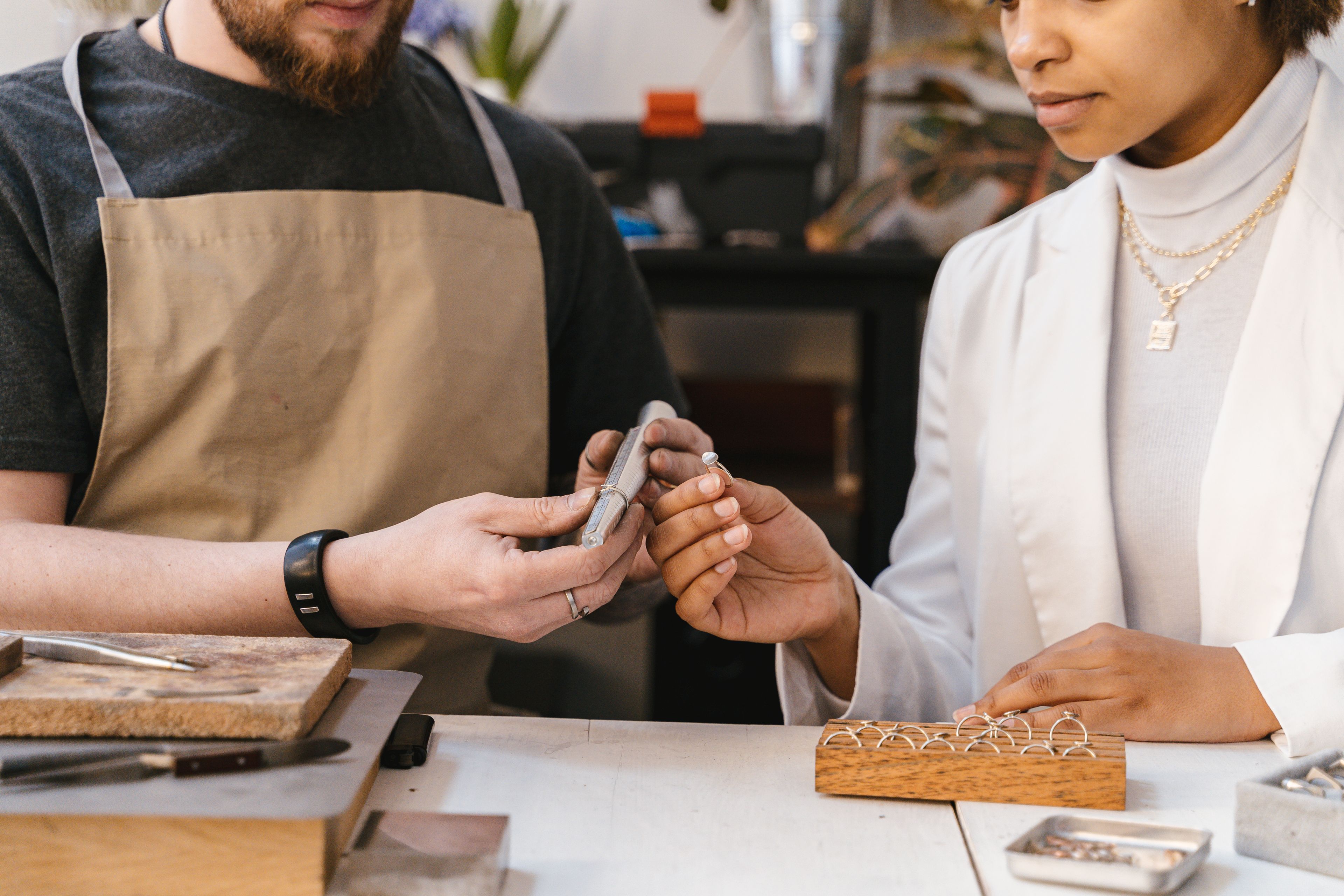
Craftsmanship is the ability to realise a design accurately and appropriately in material. Contemporary design and skilled making are not opposing ideas. A strong concept still depends on the quality of its joins, edges, settings, finish and movement.
Search interest in handmade jewelry shows that people respond to the human and material dimension of making. However, “handmade” is a production claim, not a decorative synonym. It should be used only when the process is documented. Vylore does not need that label to discuss jewelry craftsmanship; its relevant promise is design intention, precision and adherence to agreed quality standards. Read more in why jewellery craftsmanship matters.
Craft knowledge reveals what a metal permits, while design can pose new structural or finishing problems. Alignment makes a contemporary silhouette feel resolved.
What Is Contemporary Jewellery?
Contemporary jewellery responds to present-day ideas, wardrobes and ways of wearing. It may use minimal geometry, sculptural volume, unusual proportion, mixed references or a familiar form interpreted with a different visual language.
Contemporary jewelry is not automatically plain, Western or trend-dependent. In India, it can engage with history, mythology, architecture, textiles or regional memory without directly reproducing an old object. The key is interpretation: reference is processed through a current point of view.
Jewellery can communicate personality, taste and mood. A distinctive earring or ring becomes part of a personal vocabulary, allowing selection to begin with affinity rather than convention.
Why 925 Sterling Silver Supports Contemporary Jewellery Design
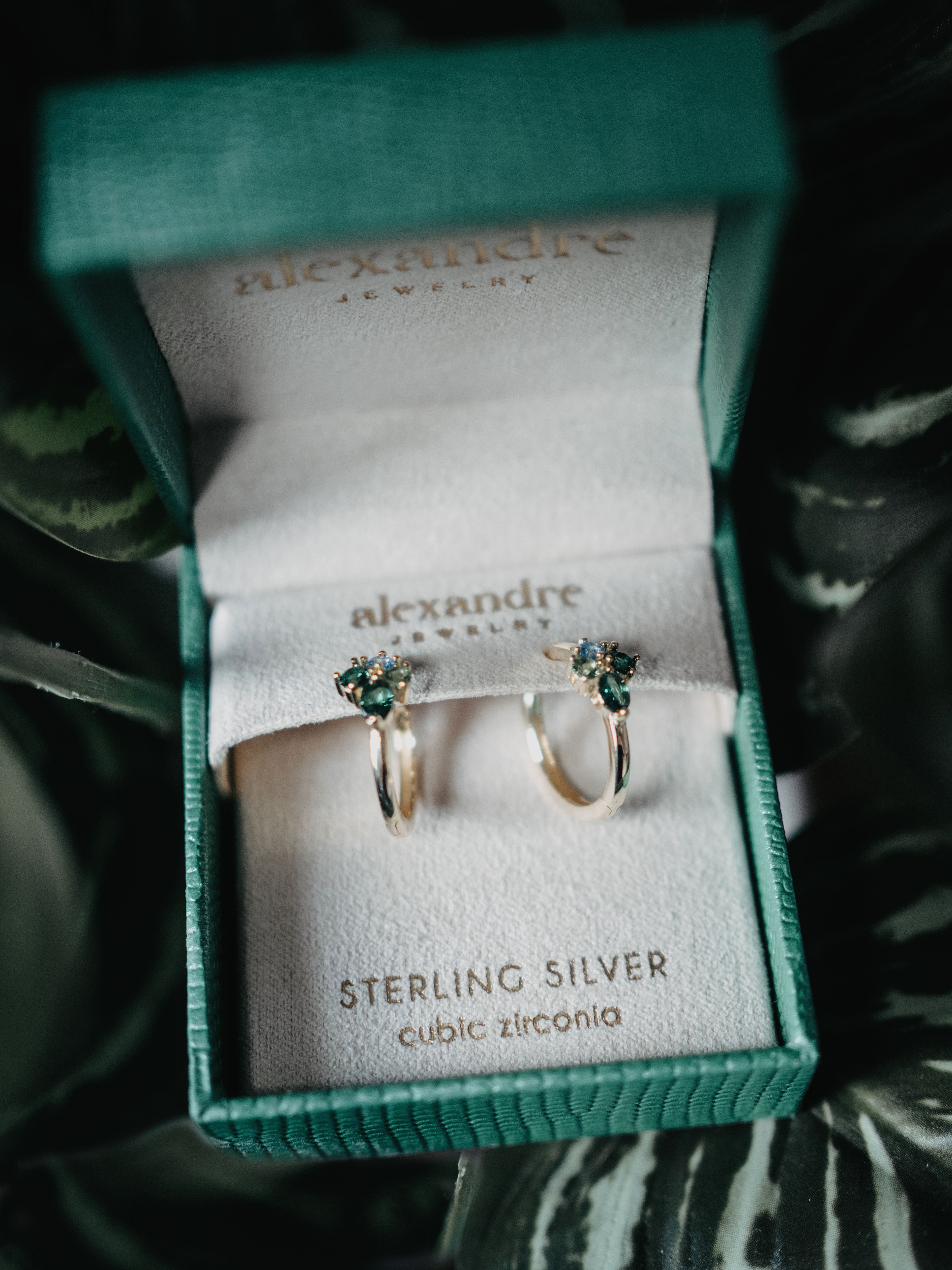
925 sterling silver is an alloy containing 92.5% silver and 7.5% other metal. The Silver Institute defines sterling silver as .925 fineness and identifies copper as the conventional alloying metal. Alloying gives naturally soft fine silver greater practicality for jewellery construction.
Silver’s neutral colour makes contour, texture and negative space easy to read. It supports restrained bands, articulated chains, detailed surfaces and sculptural volumes in sterling silver jewelry.
Vylore confirms that its silver is certified 925 sterling silver. Buyers should still review the documentation supplied for the specific product. Certification and hallmarking are not interchangeable terms: the Bureau of Indian Standards describes hallmarking as the official recording of the proportionate precious-metal content of an article.
Material alone does not guarantee good jewellery. Construction, finish, comfort, care and the suitability of a design for its intended use remain essential.
How Vylore Approaches Jewellery Through Design
Vylore is positioned as a contemporary sterling silver jewellery brand from India creating distinctive jewellery designed with intention, crafted with precision and made for individual expression. Founded by Akash Kapile, it is informed by the Kapile family’s more than 25 years of experience in the jewellery and gold business without claiming that Vylore itself has operated for that period.
Vylore’s jewellery design philosophy can be understood through six practical ideas:
- Design before decoration: silhouette, proportion and structure establish the piece’s identity.
- Distinctive but wearable forms: visual character must still respond to the body and a realistic wardrobe.
- Contemporary interpretation: history, metals, empires and mythology can inspire new forms without direct reproduction.
- Individual expression: jewellery is treated as a personal design choice rather than a fixed status code.
- Range of contexts: necklaces, rings, earrings, anklets, bracelets and other developing categories can move across everyday and occasion styling.
- Customer-led customisation: one-to-one work may respond to agreed design, size and specification requirements.
This approach treats sterling silver as its own design material, with possibilities shaped by the concept, construction and wearer.
What Sets Design-Led Jewellery Brands Apart?
No brand fits perfectly into one column, and traditional jewellery businesses can also be highly design-conscious. The comparison below describes emphasis, not a hierarchy.
| Consideration | Traditional or occasion-led emphasis | Design-led emphasis |
|---|---|---|
| Starting point | Ceremony, heritage, symbolism or established category | Concept, form, wearer and intended use |
| Product development | Familiar typologies and culturally recognised details | Silhouette, proportion, function and visual identity |
| Styling | Often anchored to an occasion or dress code | Often considered across work, casual and social wardrobes |
| Customer relationship | Selection within recognised conventions | Selection through taste, identity and possible customisation |
| Storytelling | Lineage, material value and cultural meaning | Design intention, reference, process and wearability |
The strongest jewellery landscape makes room for both. A person may want continuity in one purchase and experimentation in another.
The Future of Indian Jewellery: More Design, More Individuality
Indian jewellery’s future is unlikely to belong to one aesthetic. Heritage, contemporary, minimal, sculptural, statement, everyday and experimental work can coexist. What may grow is the customer’s expectation that a brand explain not only what a piece contains, but why it looks, feels and functions as it does.
That expectation places responsibility on jewelry design: proportion must support distinctiveness, storytelling must match the object and material claims must be clear.
Vylore fits this broader movement by building around design, certified 925 sterling silver, individual expression and transparent standards. Its opportunity is not to dismiss India’s jewellery traditions, but to add a recognisable contemporary voice to them.
Good to know
Frequently asked questions
Design-led jewellery treats form, proportion, material, function and wearability as the foundations of the piece. Decoration supports the concept rather than replacing it.
A design-led brand builds a consistent point of view across silhouettes, materials, construction, styling and storytelling. Its products reveal intentional choices rather than unrelated decorative features.
Contemporary jewellery responds to current ideas and ways of wearing. It can be minimal, sculptural, expressive or reference-rich, provided those influences are interpreted through a present-day perspective.
Its established ceremonial and heritage roles continue, while everyday, workwear-friendly and individual-expression-led jewellery expands the range of choices available to customers.
Craftsmanship translates a design into material through accurate forming, joining, setting, finishing and assembly. It determines whether the concept is convincingly and appropriately realised.
Its alloy composition makes it more practical for jewellery construction than fine silver, while its appearance can clearly express line, surface, detail and sculptural form.
Designer jewellery usually foregrounds a specific creative viewpoint. Traditional jewellery often foregrounds established forms, cultural meaning or occasion, although the two approaches frequently overlap.